Dialogue Series
على وين؟
الجلسة الثانية
٧ يناير ٢٠٢٦
٧:٠٠م بتوقيت الخرطوم
الفاعلية
Where do we go from here?
Second session
Jan 07, 2026
07:00 PM Khartoum
Agency
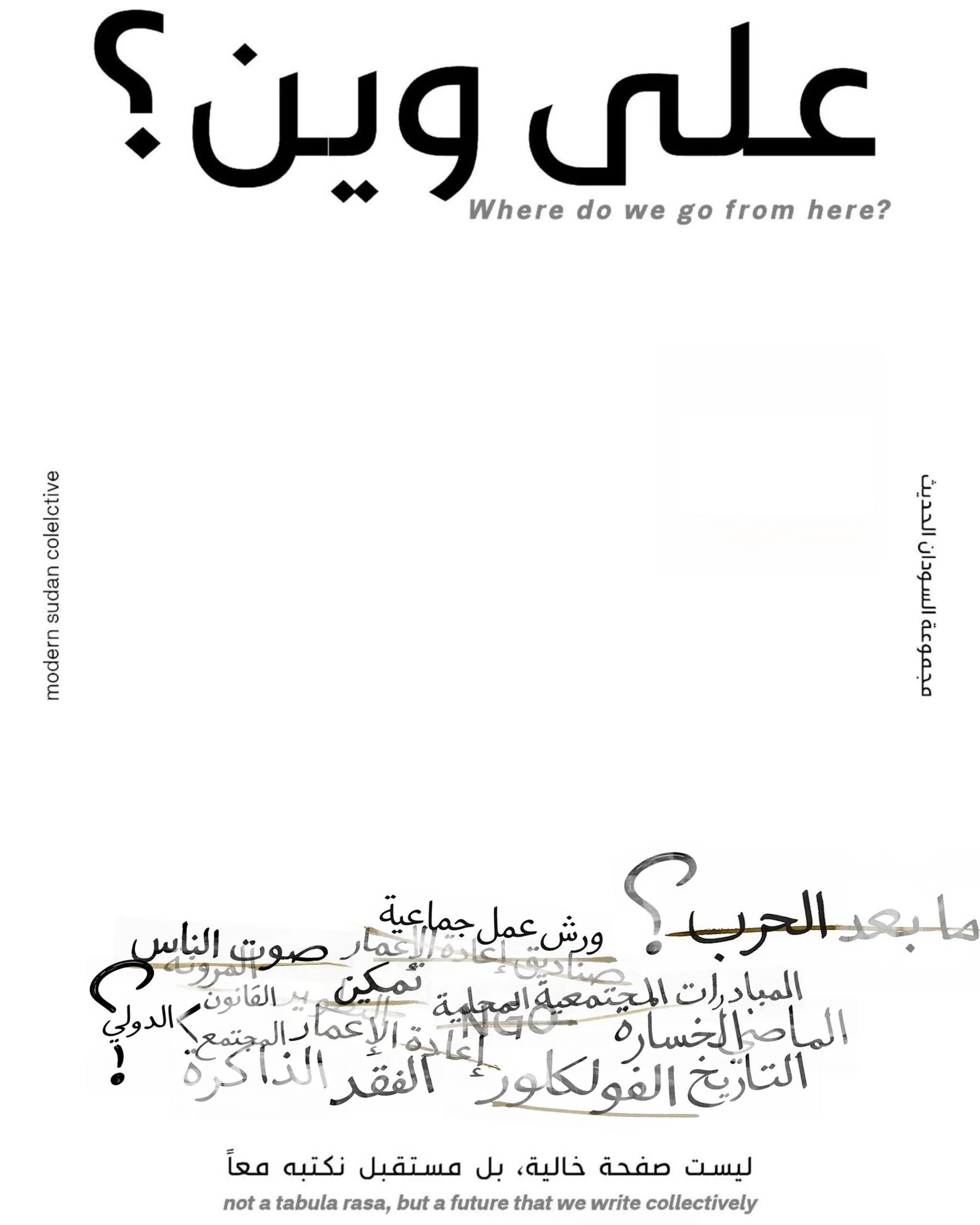
Event Description
This initiative examines the condition of conflict as a space for critical thinking beyond mere reconstruction. Its aim is to confront the enduring legacies, hierarchies, narratives, and laws that continue to shape life long after conflicts have ended. Through a series of discussions, we collectively shape the conversation.
Suggestions for participation are encouraged from a diverse range of perspectives, including architects, researchers, practitioners, students, historians, anthropologists, and artists. Topics may encompass, but are not limited to, language, history, heritage, neoliberal policies, pedagogy, and the formation of urban and social spaces.
وصف الحدث
تتطرق هذه المبادرة إلى حالة الصراع كمساحة للتفكير النقدي، متجاوزة محدودية مفاهيم إعادة الإعمار. وتهدف إلى مواجهة الإرث والطبقات والسرديات والقوانين الراسخة التي ستستمر في التأثير على حياة المجتمعات بعد انتهاء الصراعات. من خلال سلسلة من المناقشات، نعمل معًا على تشكيل هذا النقاش معاً
نرحب بالمشاركة والمقترحات من جميع التخصصات، بما في ذلك المعماريون، الباحثون
الممارسون، الطلبة، المؤرخون، الأنثروبولوجيون، والفنانون. قد تتناول المواضيع، على سبيل المثال لا الحصر، اللغة، التاريخ، التراث، السياسات النيوليبرالية، منهجيات التدريس، وتشكيل الفضاءات الحضرية والاجتماعية
2 Agency
Sudan stands at a critical juncture shaped by a long and unfinished history of political fragmentation, institutional erosion, and organized crime. The current war marks the intensification of conditions that have been repeatedly suppressed rather than resolved. Competing claims to authority, the afterlives of an old regime, and the reconfiguration of state power around armed force, patronage, and rent have produced a political landscape in which violence is not an anomaly but a governing business as usual. The proliferation of militias and parallel power structures signals a transformed state, one that operates as an instrument of dispossession.
This violence unfolds within an international landscape structured by unequal relations of power. Sudan’s land, resources, ports, and strategic geography are embedded in global and regional circuits of capital, security, and debt. External involvements, whether framed as investment, diplomacy, or reconstruction, are frequently mediated through local elites whose political survival depends on foreign patronage. These arrangements rarely disrupt extraction of land, resources, and wealth from local communities. Instead, they entrench it, consolidating an economy in which militarization, informality, and dependency reinforce one another.
To speak of post-war recovery under such conditions risks reproducing a narrative that treats destruction as temporary and repair as inevitable, while leaving intact the imperial and military-capitalist logics that perpetuate violence. When tragedy is reduced to the language of development, governance reform, or humanitarian management, the central struggle is obscured. What is at stake in Sudan is freedom, justice, sovereignty, and collective rights to land and resources.
This session approaches agency not as individual choice, institutional efficiency, or entrepreneurial adaptability, but as a collective practice shaped by material constraints and historical violence. It explores how agency is exercised where the state functions as an obstacle rather than a guarantor of rights, officials are compromised by external interests, and local elites collude in systems that are complicit in dispossession. These conditions are not moral failures alone, but structural ones as well, sustained through debt regimes, opaque financial flows, fragile judiciaries, absent or manipulated data, and the entanglement of capital with military power.
Against this terrain, the session examines multiple overlapping dimensions of agency. It considers the state as an obstacle when repression, patronage, and institutional decay disable collective action and erode the capacity for collective deliberation and shared accountability. It turns to initiatives and solidarities operating beyond conventional frameworks of representation, revealing alternative modes of organization and resistance. It also addresses structural fault lines, including the infrastructures of unfreedom through which extraction is normalized and responsibility obscured.
Rather than producing insular academic knowledge or technocratic solutions, this conversation seeks to create a space for collective learning, alliance-building, and cross-border cooperation in defiance of extractive and imperial logics. At its core, the session asks what enables groups to endure under conditions designed to exhaust them, how solidarities are forged across difference, displacement, and borders, and how imagination can be reclaimed from forces invested in foreclosing alternative futures. Agency is understood not as mastery over conditions, but as a continuous practice of resistance, grounded in collective obligation and oriented toward futures that insist on justice, sovereignty, and shared possibility.
٢ الفاعلية
يقف السودان اليوم عند مفترق حاسم، لا بوصفه استثناءً أو قطيعة مفاجئة، بل بوصفه حصيلة تاريخ طويل وغير مكتمل من التفكك السياسي، وتآكل المؤسسات، والاستخراج المنهجي للموارد. فالحرب الجارية لا تمثل انحرافًا طارئًا، بل تكثيفًا لشروط جرى قمعها مرارًا بدلا من معالجتها. إن تنازع ادعاءات السلطة، واستمرار آثار نظام ولى، وإعادة تشكيل سلطة الدولة حول العنف المسلح، وشبكات المصالح، واقتصاد الريع، كلها أسهمت في إنتاج مشهد لا تبدو فيه الممارسة العنيفة شذوذًا، بل منطقًا حاكمًا. وتكاثر الميليشيات وتعدد السيادات الموازية لا يعكسان غياب الدولة، بقدر ما يكشفان تحوّلها إلى أداة لانتزاع الحقوق وتجريد الجماعات من مواردها
يقع هذا العنف ضمن مشهد دولي تحكمه علاقات غير متكافئة من القوة. فأراضي السودان وموارده وموانئه وموقعه الاستراتيجي مندمجة في دوائر إقليمية وعالمية لرأس المال، والأمن، والديون. وغالبًا ما تمر التدخلات الخارجية—سواء قُدّمت بوصفها استثمارًا أو دبلوماسية أو إعادة إعمار—عبر نخب محلية يرتبط بقاؤها السياسي برعاية خارجية. ولا تؤدي هذه الترتيبات في العادة إلى تعطيل الاستخراج، بل إلى ترسيخه، بما يعزز اقتصادًا تتشابك فيه العسكرة، والاقتصاد غير الرسمي، والتبعية، ويغذي كلٌّ منها الآخر
إن الحديث عن تعافي "ما بعد الحرب" في ظل هذه الشروط ينطوي على خطر إعادة إنتاج سردية تتعامل مع الدمار كحالة مؤقتة، ومع الإصلاح كمسار حتمي، بينما تُبقي على حالها المنطقَين الإمبريالي والعسكري-الرأسمالي اللذين يمنحان العنف طابعه المستدام. وحين تُختزل المأساة في لغة التنمية، أو الحوكمة، أو إدارة الشأن الإنساني، يُحجب الصراع الجوهري. فما هو على المحك في السودان ليس مجرد إعادة بناء، بل الحرية، والعدالة، والسيادة، والحقوق الجماعية في الأرض والموارد
تتعامل هذه الجلسة مع مفهوم الفاعلية لا بوصفه خيارًا فرديًا، أو كفاءة مؤسسية، أو قدرة ريادية على التكيّف، بل كممارسة جماعية تتشكّل ضمن قيود مادية وتاريخ من العنف البنيوي. وتسأل كيف تُمارَس الفاعلية حين تصبح الدولة عائقًا لا ضامنًا للحقوق، وحين يُرتهن المسؤولون لمصالح خارجية، وحين تتواطأ نخب محلية مع أنظمة تكافئ نزع الملكية. فهذه الشروط ليست إخفاقات أخلاقية فحسب، بل بنيوية، يعاد إنتاجها عبر أنظمة دَّين اقتصادي، وتدفّقات مالية معتمة، وقضاء هش، وبيانات غائبة أو مُسيَّسة، وتشابك رأس المال مع السلطة العسكرية
وانطلاقًا من هذا المشهد، تتناول الجلسة أبعادًا متعددة ومتداخلة للفاعلية. فهي تنظر إلى الدولة بوصفها عائقًا عندما تُفضي آليات القمع والمحسوبية وتآكل المؤسسات إلى تعطيل الفعل الجماعي بدل تمكين الحياة السياسية. كما تلتفت إلى المبادرات وأشكال التضامن التي تعمل خارج أطر التمثيل التقليدية، كاشفةً عن أنماط بديلة للتنظيم والمقاومة. وتتناول كذلك خطوط الصدع البنيوية، بما فيها بُنى اللّاحرية التي يُطَبَّع عبرها الاستخراج وتُطمس فيها المسؤولية
بدلًا من إنتاج معرفة أكاديمية منغلقة أو حلول تكنوقراطية اختزالية، تسعى هذه الجلسة إلى فتح حيّز للتعلّم الجماعي، وبناء التحالفات، والتعاون العابر للحدود، في مواجهة المنطقين الاستخراجي والإمبريالي. وفي صميمها، تطرح الجلسة عدة أسئلة: ما الذي يمكّن الجماعات من الصمود في ظروف صُمّمت لاستنزافها؟ وكيف تتشكّل التضامنات عبر الاختلاف والحدود وفي ظل النزوح؟ وكيف يمكن استعادة الخيال من قوى تسعى إلى إغلاق أفق المستقبل؟ هنا تُفهم الفاعلية لا بوصفها سيطرة على الشروط، بل ممارسة مستمرة للمقاومة، متجذّرة في الالتزام الجماعي، وموجّهة نحو مستقبل يصرّ على العدالة، والسيادة، ومسؤولية مشتركة
:تتضمن هذه الجلسة مداخلات من
منى حرب
الحوكمة الحضرية في سياق الأزمة الدائمة: التخيلات الاستباقية
للإيكولوجيين الزراعيين في لبنان
نادين بكداش، استوديو الأشغال العامة
رسم الخرائط من أجل التعافي
سارة إبراهيم خوجلي
ما بعد الإعمار: مناهضة آفاق استخراجية في السودان
This session includes:
Mona Harb
Urban Governance in Permacrisis: Agroecologists’ Prefigurative Imaginaries in Lebanon
Nadine Bekdache, Public Works Studio
Mapping for Recovery
Sarah Ibrahim Khogali
Beyond Reconstruction: Resisting Extractive Futures in Sudan
انضموا الينا في الجلسة الثانية عبر التسجيل في الاستمارة ادناه
Join us on the second session by completing the form below.